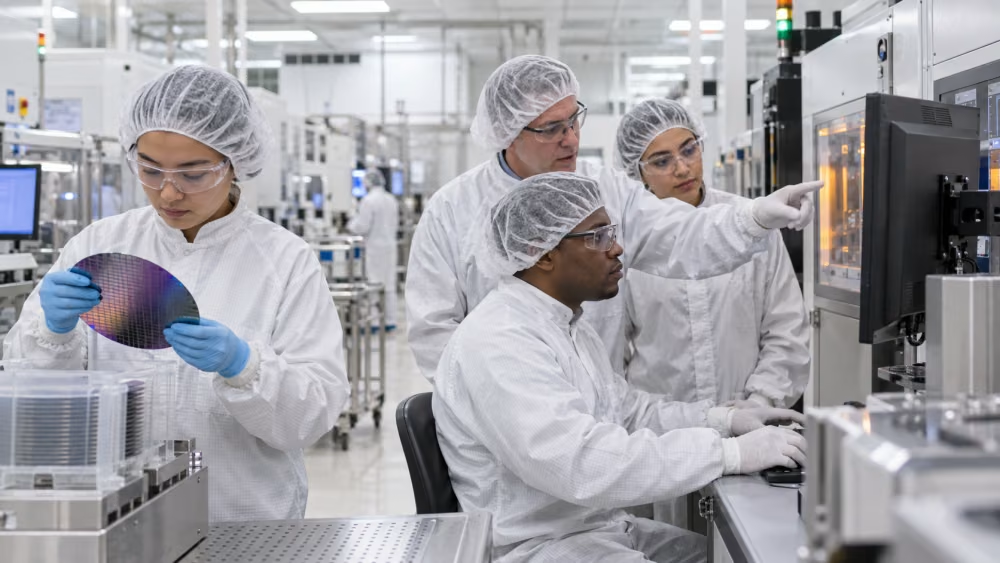
New workforce research shows that expanding semiconductor production will require hands-on training closely aligned with the jobs inside modern fabs.
Recent reporting on the U.S. semiconductor workforce has renewed attention on a critical constraint facing domestic chip production: manufacturers need more engineers and technicians with the specialized skills required to operate complex fabrication facilities. As new plants and expansions move forward, workforce readiness is becoming as important as construction schedules and equipment investment.
The challenge is not simply a matter of producing more degree holders. A September analysis from Georgetown University’s Center for Security and Emerging Technology examined 3,441 U.S. semiconductor manufacturing job postings from January 2023 through April 2025. Engineering and technician positions were the most common roles, but the postings covered 85 occupations and appeared across 48 states and the District of Columbia.
That breadth points to a workforce-development challenge extending well beyond semiconductor hubs. Employers need people with industry-specific capabilities such as electronics and microelectronics manufacturing, alongside transferable strengths including communication, problem-solving and teamwork.
Training programs can respond by working directly with manufacturers to translate job requirements into curricula, credentials and work-based learning. Registered apprenticeships, internships and other earn-and-learn models can help participants develop job-specific competencies while gaining experience in the highly controlled environments found in semiconductor production.
Access to equipment is equally important. Colleges often cannot independently afford the specialized tools needed to recreate a fab environment. Partnerships among employers, educational institutions and regional workforce organizations can give learners meaningful hands-on experience while allowing companies to shape instruction around real production needs.
The long-term objective should be more than filling an initial wave of openings. Employers and workforce partners also need to create durable career pathways that help technicians and engineers enter the industry, advance their skills and remain in the field. As U.S. semiconductor capacity grows, regions that connect recruitment, practical training and retention will be better positioned to turn manufacturing investment into sustained employment and production strength.
Source Note
The post is based on September 18 reporting from Tom’s Hardware(Opens in a new tab/window), supported by the September 2026 Center for Security and Emerging Technology workforce analysis(Opens in a new tab/window). Additional context comes from the Semiconductor Industry Association(Opens in a new tab/window) and McKinsey & Company(Opens in a new tab/window).