
The company’s latest U.S. expansion plan points to a broader shift from single-facility hiring needs to long-term talent pipelines for advanced electronics manufacturing.
TSMC’s latest U.S. investment announcement is another signal that semiconductor manufacturing growth is becoming a long-range workforce challenge, not just a construction or capital-spending story.
On July 16, the White House and U.S. Department of Commerce announced that TSMC plans an additional $100 billion investment in advanced semiconductor manufacturing and packaging facilities in Arizona. According to the Department of Commerce and NIST, the new commitment brings TSMC’s planned U.S. investment to $265 billion and would support 12 leading-edge semiconductor and packaging facilities in the United States.
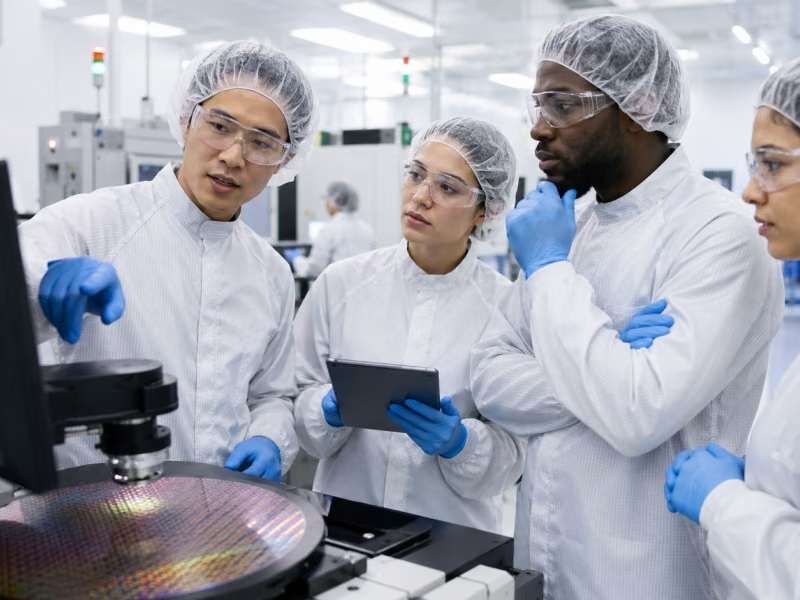
For electronics manufacturers, educators, and workforce partners, the important trend is the scale and duration of the buildout. Large semiconductor projects require more than engineers and plant leadership. They depend on cleanroom technicians, maintenance specialists, equipment operators, quality teams, process technicians, supply chain staff, and trainers who can support production as facilities come online and mature.
The Associated Press reported that TSMC tied the expansion to strong demand from U.S. customers and continued growth in AI-related computing needs. Manufacturing Dive also noted that the announcement follows other major semiconductor commitments in the U.S., reinforcing the sense that domestic chip capacity is becoming a larger industrial ecosystem rather than a collection of isolated projects.
That ecosystem will need workforce planning that starts early. Advanced fabs and packaging operations require workers who understand precision, safety, documentation, automation, and process discipline. Many of those capabilities overlap with broader electronics manufacturing, which means regional training partnerships can help build talent for both semiconductor facilities and the suppliers that support them.
The takeaway for EMAC’s audience is clear: as advanced electronics production expands in the United States, workforce development must scale with it. Employers, schools, and workforce organizations that align training around real production skills will be better positioned to help workers enter these careers and help manufacturers sustain growth over time.
Source note
Main sources: NIST/CHIPS for America announcement(Opens in a new tab/window), Associated Press reporting, and Manufacturing Dive(Opens in a new tab/window).