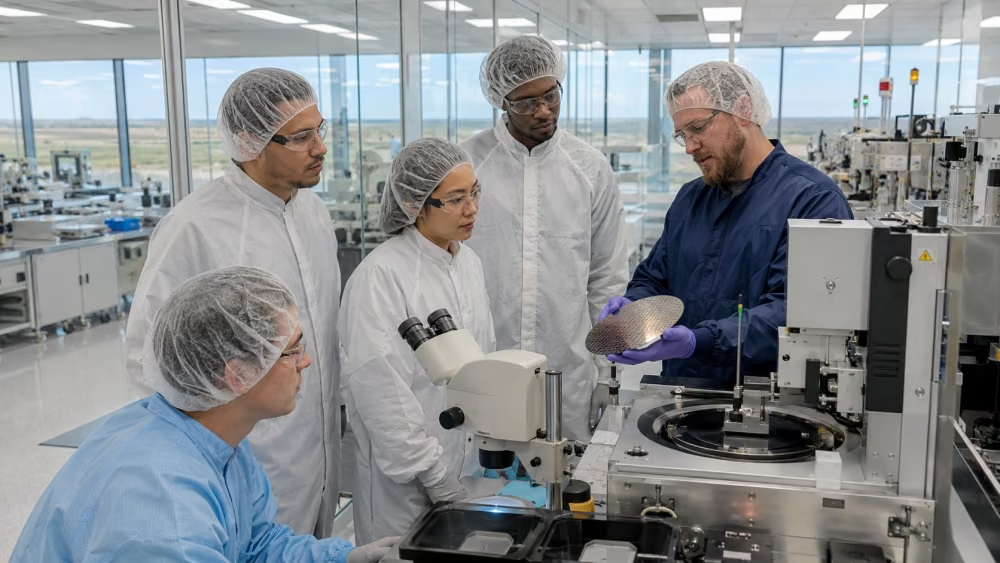
The planned semiconductor campus could create thousands of jobs, but building a regional skills pipeline will be essential to turning investment into production capacity.
SpaceX and Tesla have selected Grimes County, Texas, for the first phase of Terafab, a planned semiconductor manufacturing campus focused on chips for artificial intelligence, vehicles, robotics and space-based computing. Announced August 6, the initial phase is expected to involve $16.8 billion in investment and employ at least 3,000 people.
The project’s manufacturing ambitions are unusually broad. Terafab is envisioned as an integrated campus combining logic and memory chip production with packaging and testing. If completed as planned, that model would require talent across semiconductor processing, equipment maintenance, quality control, facilities operations, automation and advanced packaging.
Public agreements provide a more conservative benchmark for the project’s local impact. SpaceX has committed to invest at least $5 billion in Grimes County by 2030 and create at least 1,800 full-time jobs by 2035. The larger investment and employment figures remain forward-looking, making early workforce preparation important even as the project continues to develop.
Company representatives have said Terafab will work with local schools to create a talent pipeline. That collaboration will be especially important if the project is to meet its stated goal of drawing 60% to 80% of its workforce from Grimes and neighboring Brazos County. Local colleges, school districts and workforce boards will need clear information about occupations, hiring timelines and required credentials before they can scale programs effectively.
The opportunity extends beyond four-year engineering degrees. A campus combining fabrication, packaging and testing would also depend on technicians skilled in electronics, mechatronics, industrial maintenance, process control, cleanroom operations and inspection. Work-based learning, short-term credentials and registered apprenticeships could help regional residents enter these roles while giving employers a more reliable supply of job-ready talent.
For workforce partners, the practical takeaway is to begin alignment early. Mapping likely occupations, adapting existing manufacturing programs and creating shared training equipment can shorten the distance between an investment announcement and a productive local workforce. Terafab’s ultimate scale is not yet certain, but its direction is clear: major electronics investments increasingly depend on workforce infrastructure built alongside the factory.
Source Note
The post is based on the SpaceX project update(Opens in a new tab/window), Tom’s Hardware coverage of the August 6 announcement(Opens in a new tab/window), KBTX reporting on the executed Grimes County agreement(Opens in a new tab/window) and Houston Chronicle reporting on the local workforce plans(Opens in a new tab/window).