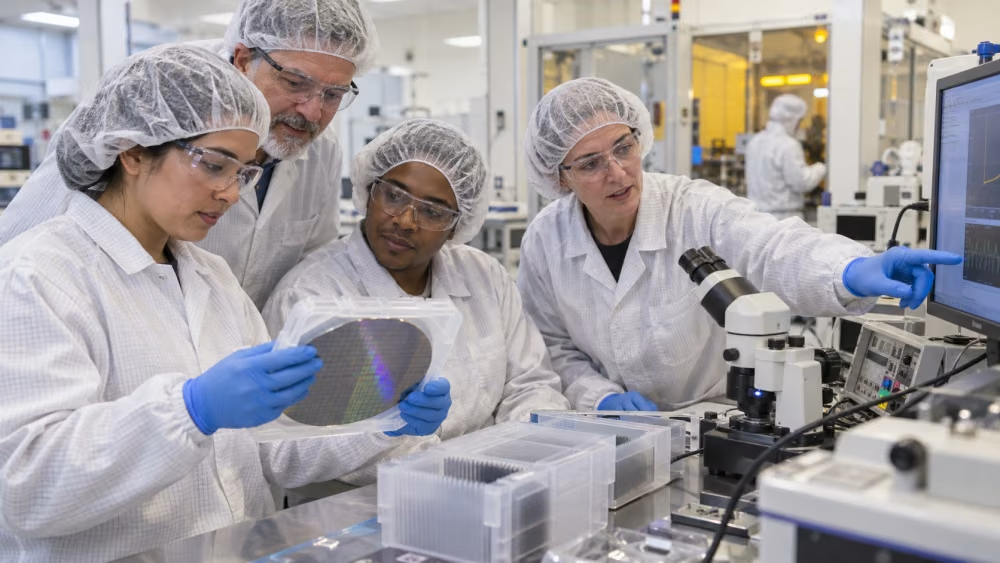
A new industry advisory committee will help align U.S. microelectronics education with changing skills, equipment and hiring needs.
The National Network for Microelectronics Education has formed its first Industry Advisory Committee, giving semiconductor employers and educators a shared forum for shaping workforce training across the United States.
Announced September 9, the committee includes representatives from semiconductor manufacturers, technology companies, equipment and materials suppliers, universities and community colleges. It will help the network identify workforce challenges, validate employer needs and guide education and training strategies.
That employer input matters because semiconductor skills can change faster than conventional curricula. New production processes, equipment and automation can alter what technicians and engineers need to know before they enter a fabrication plant, packaging operation or supplier facility. Regular industry feedback can help educators keep laboratory experiences, course content and credentials relevant.
The scale of the workforce challenge makes that coordination increasingly important. A 2026 analysis published with NNME projected a U.S. semiconductor talent gap of approximately 127,000 to 157,000 workers by 2030. It estimated that manufacturing-related positions will represent about 74% of incremental workforce demand.
The same analysis found that employer-linked technician programs, including apprenticeships and accelerated training, can produce strong placement results. Their impact, however, remains concentrated in regions near semiconductor facilities and is often tied to individual hiring cycles. A national network can help successful approaches travel between regions while leaving room for programs to respond to local employers.
For manufacturers, the practical takeaway is to stay involved after a training program launches. Recurring guidance on equipment, competencies and entry-level roles can help schools prepare students for real production environments. For educators and workforce partners, the new committee offers another channel for turning employer demand into training that is current, scalable and connected to opportunity.
Source note
Based primarily on the September 9 announcement from SEMI and NNME(Opens in a new tab/window), with context from the NSF overview of NNME’s regional network(Opens in a new tab/window) and the 2026 national semiconductor workforce analysis(Opens in a new tab/window).